Look for a Gap in the Coil
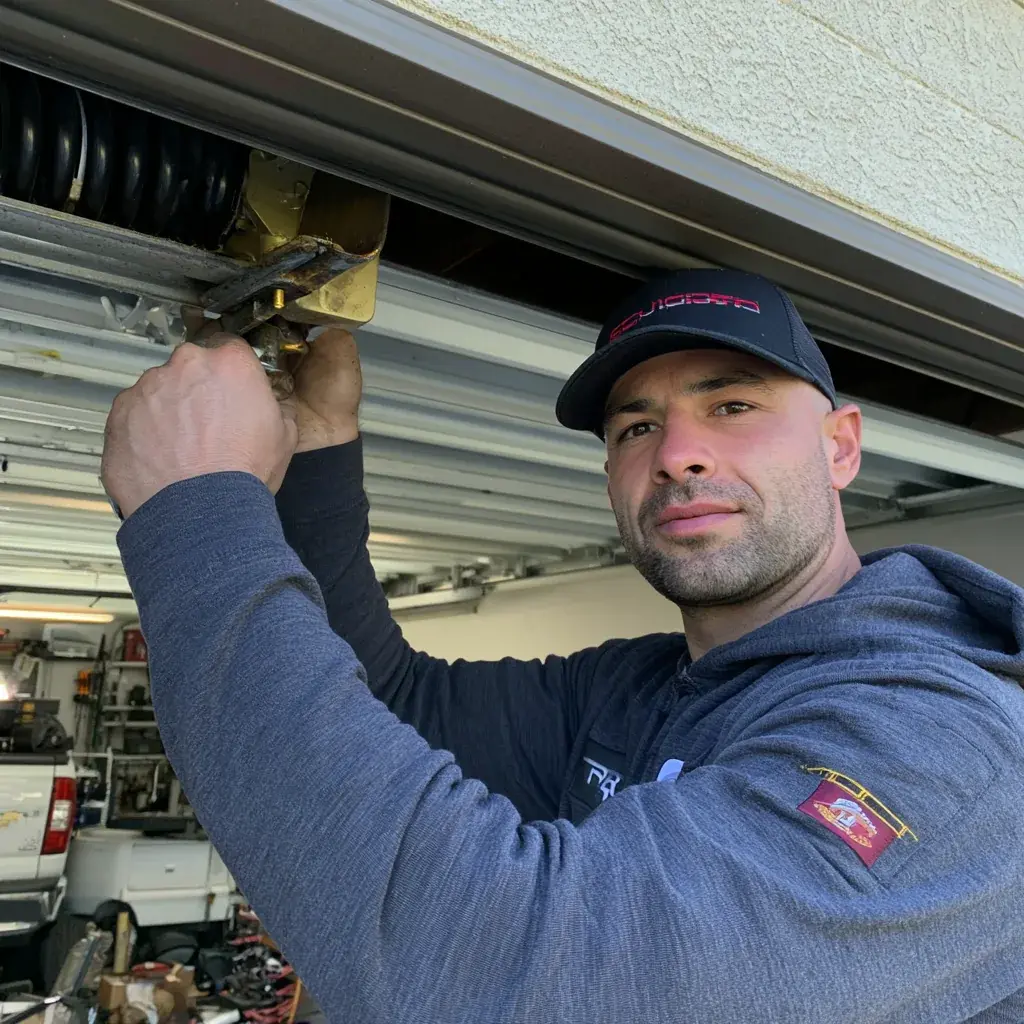
1. Check whether the spring runs above the door or along its sides. Some doors use long springs beside the tracks instead of a shaft above them. 2. Do not touch the coil or reach toward the shaft. 3. If the door is already open, crooked, or moving, leave it alone. In Blue Springs, Central Park, Pink Hill Park, and Remembrance Lake are local reference points, not signs of spring condition.
1. Look for a pair of long springs running beside the horizontal tracks. 2. If there is no exposed coil, do not assume the spring is intact; some systems enclose their parts. 3. Do not remove a cover or test the mechanism to identify it. The spring design changes what is visible, but a homeowner can stop at a distant visual check and describe the setup to the pros we connect you with.
Notice How the Door Moves
1. Notice whether the opener light flashes or its motor runs without panel movement. 2. A spring break removes lifting help, so the opener may struggle with a heavy door. 3. Treat that behavior as a clue, not proof: an opener or another door part can also affect movement. In Blue Springs, a house near Gregory O. A single observation is enough to describe the change without repeating the cycle.
1. Look from a distance at the lift cables and drums near the shaft ends. 2. Note a slack cable, a cable off its drum, or visible fraying; these can appear alongside a spring problem and help explain uneven travel. 3. Do not reach in, pull a cable, or try to reseat it. At a small commercial property as at a home, the door’s motion and cable position are observations only. Keep people away from the door until its condition has been checked.
Make a Still, Distant Check
1. Keep the door still while checking; do not press the opener to reproduce a sound or stall. 2. Look at the hinges and rollers for anything visibly out of line. 3. An opener that runs without lifting does not identify which part has failed. A Blue Springs homeowner can make this visual check at home; nearby place names such as Central Park do not change the safe limit: observe from clear of the door and its hardware.
1. Note whether the door changed speed, shifted to one side, or stopped abruptly. 2. Note any visible coil gap, loose cable, or unusual noise without approaching the parts. 3. Do not disconnect the opener or attempt a balance test; that involves moving a door whose spring condition is uncertain. A short description gives the pros we connect you with useful clues. If the door is already stuck or uneven, leave it where it is and make the call from a safe place.
Stop and Report the Clues
1. Spring tension can remain dangerous even when the door is not moving. 2. Keep people clear and do not try another open or close cycle. 3. Call a professional and report the clue you observed. Do not use the door as a passage while the hardware is under suspicion. Keep tools and loose objects away from the spring assembly.
At a Blue Springs home, including near Gregory O. Grounds Park or Blue Springs School District, follow this order. First, with the door closed, look from a distance at the spring shaft and lift cables; do not touch either. A slack cable can accompany a spring failure, though it can also point to a cable or drum problem. Next, note whether the opener strains while the door stays shut or the door seems suddenly heavy. Stop operating it and call a professional; those signs need confirmation.
Dealing with this in your home?
A Blue Springs service request starts with the street address, since a landmark alone cannot confirm coverage. Call +18163670278 and ask the pros we connect you with whether they can take that address, when they are available, and what timing they expect. Confirm any visit charge before setting an appointment, and ask what inspection is included. Heisler Park can help identify the local area; Independence Square or Downtown Lee's Summit may give wider regional context. Those references do not establish coverage. The exact address lets the provider answer that question and explain the next step for the property.