Start With The Supplied Spring
1. Start with the spring label and installation record. Builder-grade usually means the standard spring chosen for a new construction door. It describes the supplied part, not how carefully the door is used or how long it will last. A Blue Springs owner can compare the installation age with the first failure. The installation date alone may not show how much use the spring had during construction.
2. Read the cycle rating if it is available. Look for a cycle rating tied to the spring rather than relying on the builder-grade label. The rating does not show how many cycles the spring has already handled. That rating estimates use, not a calendar lifespan. A household that opens the door often may reach the rating sooner than one that leaves it closed. The label gives a better starting point than the phrase builder-grade by itself.
Account For Early Door Use
3. Consider who used the door before move-in. During construction, workers may open it for tools, materials, or finishing work. Construction use is one reason a spring's age may not tell the whole story. A door can therefore seem new while its springs have already handled substantial use. The number of trips may not be recorded, so the construction period is useful context when the owner compares the spring's age with its rating.
4. Note whether use changed after occupancy. Several daily departures and returns can add cycles steadily, while a door used only occasionally accumulates them more slowly. A small business with repeated deliveries may put a different pattern on its door than a household. This does not prove that use caused a failure. It helps explain why a standard spring may reach its expected cycle range sooner than the owner anticipated.
Check For Trouble From Afar
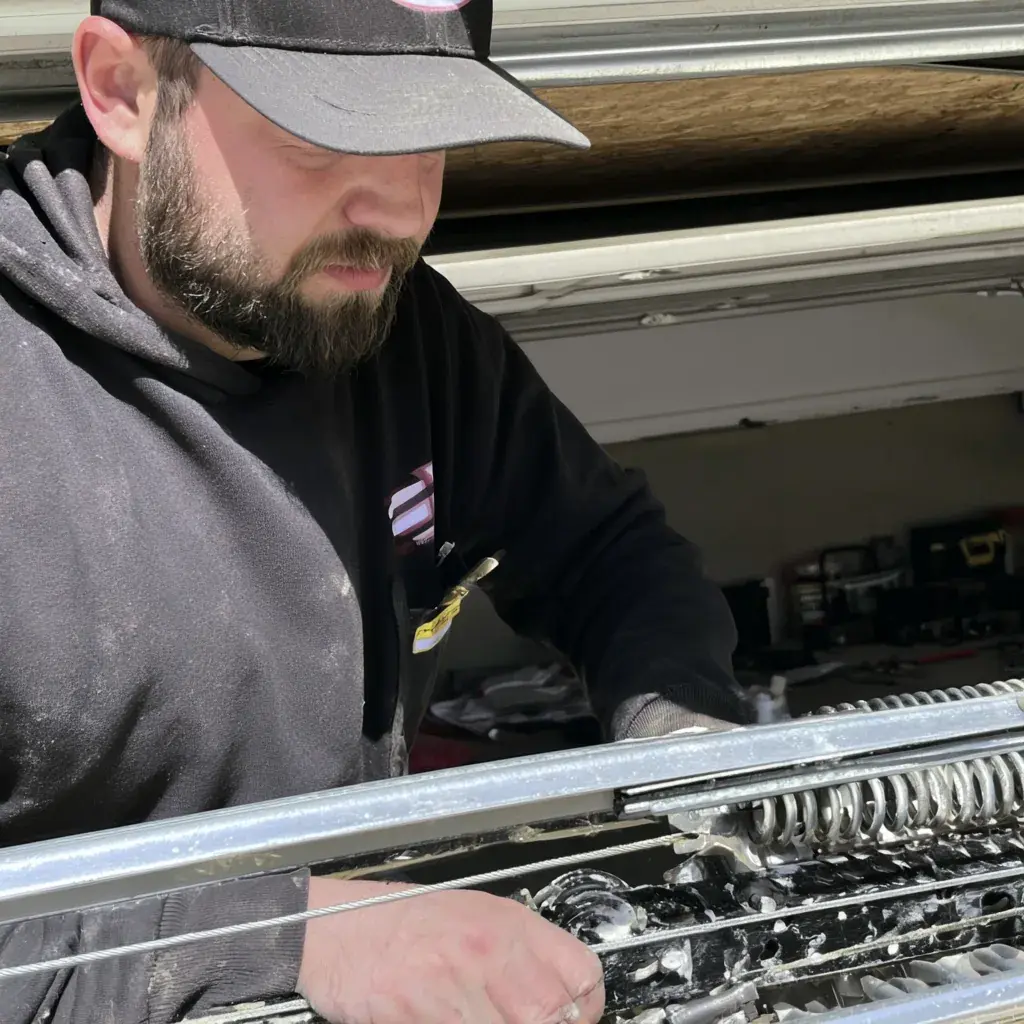
5. Watch the door from a safe distance for uneven movement, a sudden change in travel, or an opener that strains. On a torsion system, a visible break in the coil can leave a clear gap. Treat a visible gap as a reason to stop, not as an invitation to inspect the coil closely. A spring under tension can release dangerous force. If the door looks crooked or stops moving normally, keep people clear and stop operating it.
1. Read the spring label, if visible, and note its cycle rating; builder-grade usually means a basic part supplied with new construction. Rust, moisture, or worn hardware can shorten spring life even when the cycle count seems low. 2. Check the use history. Contractor visits, deliveries, and repeated move-in access add trips before household routines settle. 3. The opener relies on the spring to carry most of the door’s lifting load. 4. Compare spring paperwork with home documents; a new-home label does not establish coverage. Near Central Park or Pink Hill Park in Blue Springs, stop using a door with a suspected broken spring. Do not adjust tension; have the pros we connect you with assess it.
Record The Rating And Age
7. Record the label, installation age, and symptoms from a safe position. Check the new-home paperwork for the door model or spring information. Builder documents and spring terms may address different items, so the word new does not settle what is covered. Keep the record with the date the movement changed. That gives the owner useful context without assuming the warranty applies to a particular failure.
8. Use the rating and age to plan the next decision. The rating can help frame a plan, but the door's condition also matters. If the spring has broken or the door is heavy, stop using it and arrange professional attention. Never wind, unwind, or adjust spring tension at home.
Dealing with this in your home?
A Blue Springs service request starts with the street address, since a landmark alone cannot confirm coverage. Call +18163670278 and ask the pros we connect you with whether they can take that address, when they are available, and what timing they expect. Confirm any visit charge before setting an appointment, and ask what inspection is included. Heisler Park can help identify the local area; Independence Square or Downtown Lee's Summit may give wider regional context. Those references do not establish coverage. The exact address lets the provider answer that question and explain the next step for the property.